











.webp)

인스타그램 팔로우하기
아웃도어 기업 그 이상.

쏘이어프로덕트
Follow us on Instagram










A confluence of form factors, tech, and knock-offs have led to a muddled market for one of the most important pieces of gear a hiker will ever own.
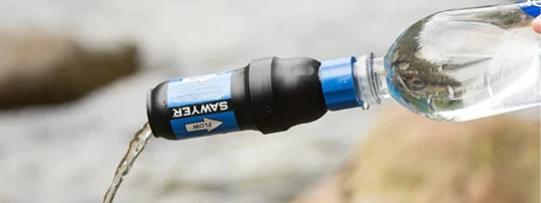
Watch videoIf you’ve gone shopping for a new water filter recently, you know that trying to differentiate between the various options isn’t an easy task. The market is saturated with straw-style filters—lightweight tubes that look like they’re jammed full of vermicelli noodles and meant for squeezing or sucking water through. They come in slightly different colors and lengths, but fundamentally, they’re all the same: hollow fiber filters that use thousands of hair-width tubes covered in microscopic pores to strain out bacteria and sediment.
Ten years ago, it was easier to differentiate between gizmos. There was no mistaking a ceramic pump filter with a UV pen. Straw filters were the minority, with Lifestraw and Sawyer making the two dominant versions. Not only do today’s most reputable brands make very similar water filters, but the market for copycat water filters is rampant on websites like Amazon, where you can find dozens of Lifestraw knock-offs for cheap.


If you’ve gone shopping for a new water filter recently, you know that trying to differentiate between the various options isn’t an easy task. The market is saturated with straw-style filters—lightweight tubes that look like they’re jammed full of vermicelli noodles and meant for squeezing or sucking water through. They come in slightly different colors and lengths, but fundamentally, they’re all the same: hollow fiber filters that use thousands of hair-width tubes covered in microscopic pores to strain out bacteria and sediment.
Ten years ago, it was easier to differentiate between gizmos. There was no mistaking a ceramic pump filter with a UV pen. Straw filters were the minority, with Lifestraw and Sawyer making the two dominant versions. Not only do today’s most reputable brands make very similar water filters, but the market for copycat water filters is rampant on websites like Amazon, where you can find dozens of Lifestraw knock-offs for cheap.
If you’ve gone shopping for a new water filter recently, you know that trying to differentiate between the various options isn’t an easy task. The market is saturated with straw-style filters—lightweight tubes that look like they’re jammed full of vermicelli noodles and meant for squeezing or sucking water through. They come in slightly different colors and lengths, but fundamentally, they’re all the same: hollow fiber filters that use thousands of hair-width tubes covered in microscopic pores to strain out bacteria and sediment.
Ten years ago, it was easier to differentiate between gizmos. There was no mistaking a ceramic pump filter with a UV pen. Straw filters were the minority, with Lifestraw and Sawyer making the two dominant versions. Not only do today’s most reputable brands make very similar water filters, but the market for copycat water filters is rampant on websites like Amazon, where you can find dozens of Lifestraw knock-offs for cheap.
아웃도어 기업 그 이상.

